
Mon to Sat 07 am to 06 pm
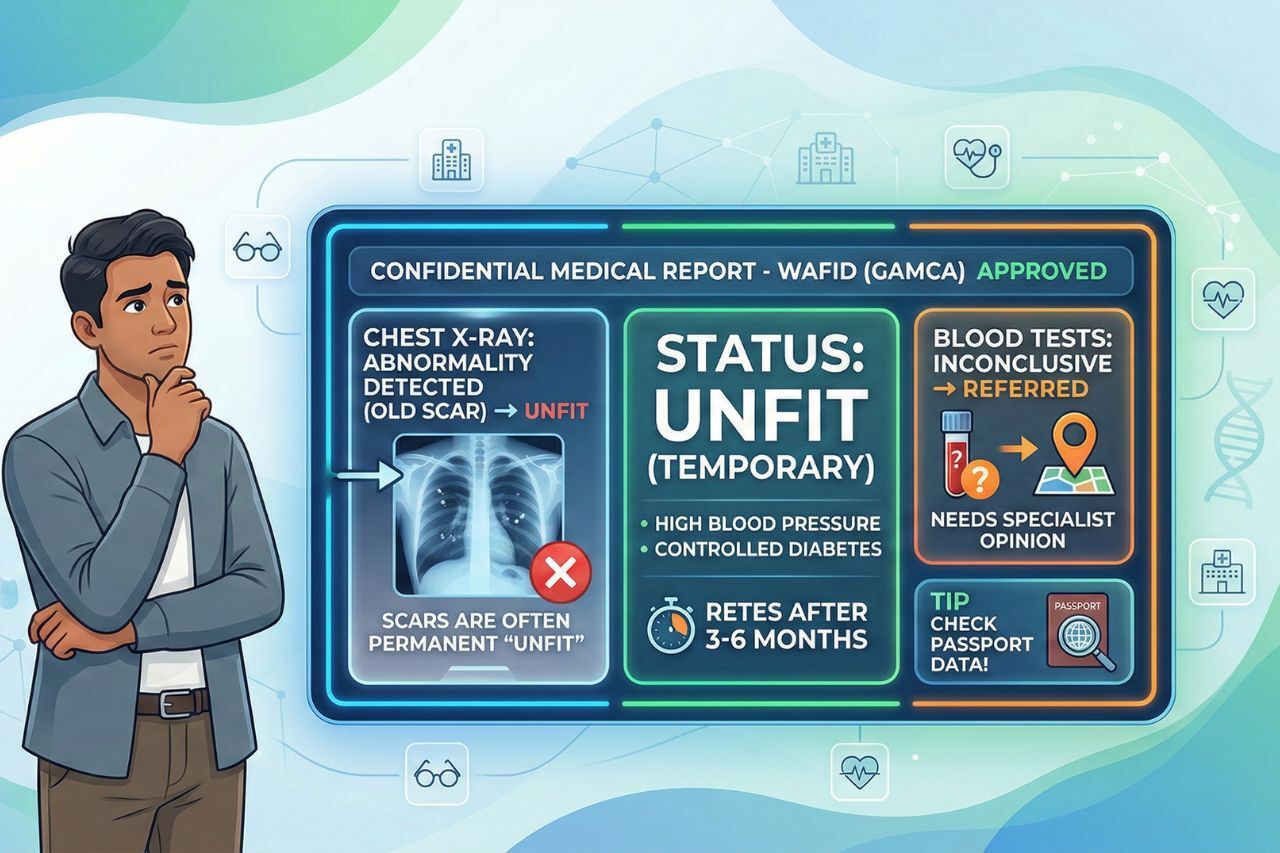
When you get your GAMCA medical report after the check-up at an approved center, it's common to feel confused by what certain sections mean. Many applicants from India, especially in places like Kolkata, misread parts of the report and end up worried or make wrong assumptions about their status. This can lead to unnecessary stress or missed chances to fix simple issues.
The GAMCA medical report usually includes your personal details, a summary of the physical exam, lab results, X-ray findings, and the final fit or unfit decision. Below are the sections that people misunderstand most often, explained clearly to help you read your report better.
One big confusion is thinking "unfit" means you can never go to a Gulf country. In reality, the label depends on the reason:
Some unfit results come from temporary or treatable issues, like high blood pressure on the day, uncontrolled sugar levels, low haemoglobin, or mild infections.
Others are stricter, like positive tests for certain infectious diseases (HIV, active TB, Hepatitis B/C in many cases), which often lead to longer restrictions or permanent issues.
People often panic over "unfit" without checking the exact cause listed in the report. If it's something correctable, you can get treatment and reapply after a waiting period (usually 3-6 months for some conditions). Always look for the detailed reason—don't just stop at the overall status.
The chest X-ray section trips up a lot of applicants. Many see small spots, scars, or nodes and assume it's active tuberculosis, leading to automatic inactivity.
Healed or old TB scars (calcified spots from past infection) can show up clearly, but if you have proof of treatment and no active disease, it might not disqualify you.
Fresh or suspicious shadows, cavities, or lymph node changes often trigger unfit or need extra checks.
A common mistake is thinking any mark means failure. Bring old medical records or a doctor's note about past treatment—it can make a big difference when the centre reviews it.
Lab results show numbers for things like sugar, blood pressure, liver enzymes (ALT, AST), and bilirubin. People often misunderstand slightly high bilirubin or enzymes.
Mildly raised bilirubin might point to something harmless like Gilbert's syndrome (a common genetic trait that doesn't affect health much), but applicants think it signals serious liver damage or hepatitis.
Elevated liver enzymes can come from temporary causes like recent alcohol, fatty liver, or even medicines, not always hepatitis.
If these are borderline, the report might say "held" for more tests instead of straight unfit. Don't assume the worst from one high number, get a doctor's explanation.
Sometimes the report says "held" or requires additional tests instead of fit/unfit right away. Many think this is the same as unfit.
It usually means something needs clarification, like a repeat X-ray, specialist opinion, or more blood work.
It's not a final rejection; follow the instructions to complete the extra steps, and you can still pass.
Ignoring this or delaying often turns a fixable issue into a bigger problem.
The report shows a date when the certificate is valid (often 60-90 days). A frequent mix-up is thinking the medical fitness lasts forever once stamped on the visa.
The initial GAMCA certificate has a short window for visa processing.
After visa stamping, Gulf countries do their own checks on arrival, which can sometimes flag issues not caught earlier.
Plan your visa steps quickly after getting the report to avoid redoing the whole process.
Always ask the center for a clear explanation of any abnormal finding before leaving.
Keep copies of everything, reports, old records, and notes.
If something seems off, talk to a doctor or the centre quickly rather than guessing.
Check the official portal for your results to confirm no errors in personal details.
Understanding these commonly confusing parts can save time, money, and worry. The GAMCA process is strict for good reasons, but most issues have clear explanations and paths forward.