Mon to Sat 07 am to 06 pm
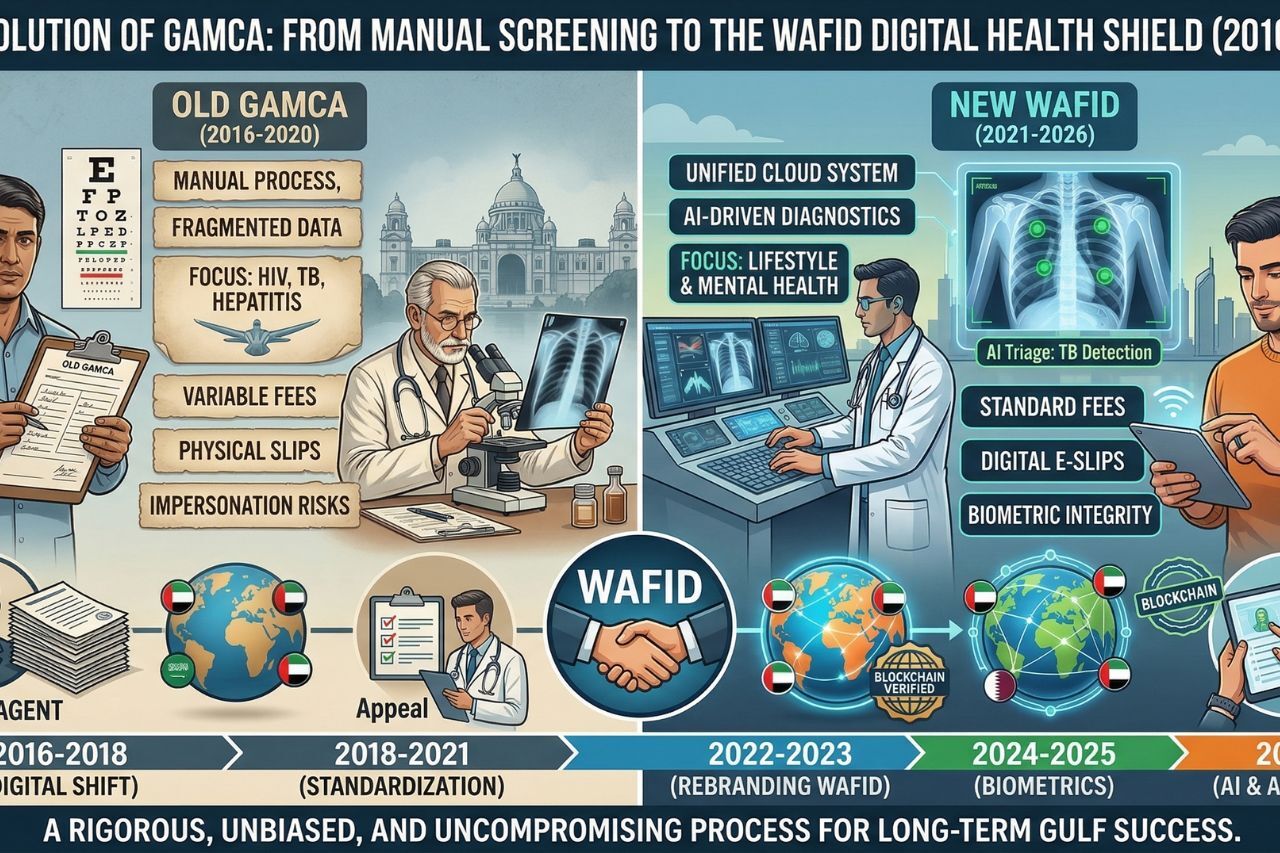
Over the past decade, the GAMCA medical test has undergone a significant transformation. What was once a relatively straightforward screening process has evolved into a more structured, transparent, and technology-driven system.
For millions of expatriates seeking employment in GCC countries, understanding how GAMCA standards have changed is essential. These changes not only reflect advancements in healthcare but also stricter regulatory frameworks aimed at ensuring public health safety across the Gulf region.
The GAMCA (Gulf Approved Medical Centers Association) is responsible for standardizing medical examinations for expatriates traveling to GCC countries such as the UAE, Saudi Arabia, Kuwait, Qatar, Oman, and Bahrain.
Its primary objective is to:
Over time, GAMCA has adapted its processes to meet the growing demands of global migration and healthcare advancements.
Around a decade ago, the GAMCA medical examination focused mainly on:
Limitations of Early Systems:
At this stage, the process was functional but lacked the efficiency and transparency seen today.
One of the most important developments in GAMCA’s evolution was the introduction of:
Applicants are now automatically assigned to specific GAMCA-approved medical centres.
Standardised procedures ensure that every applicant undergoes the same tests and results are consistent across regions.
Impact:
The last decade has seen a major shift toward digitalization in GAMCA systems.
Key Advancements:
Benefits for Applicants:
This shift has made the GAMCA medical report process more efficient and user-friendly.
As public health awareness increased, GAMCA standards became more stringent.
Expanded Screening Includes:
Why the Change?
These stricter standards ensure a healthier workforce in GCC countries.
With advancements in medical technology, GAMCA-approved centres now use:
Results:
This has significantly enhanced the reliability of GAMCA medical reports.
In the past, applicants often faced confusion regarding medical report status and reasons for the unfit results. Today, GAMCA has improved transparency through:
This has helped build trust in the system.
GAMCA standards have become more aligned with GCC national healthcare policies. Examples include coordination with immigration authorities, alignment with labour and health regulations, and integration with digital health systems. This ensures that GAMCA remains relevant in an evolving healthcare ecosystem.
GAMCA is no longer just a screening body—it plays a key role in preventing disease outbreaks, protecting public health in GCC countries, and ensuring workplace safety. This expanded role reflects the growing importance of medical screening in global migration.
Despite progress, GAMCA has faced challenges such as high applicant volumes, regional healthcare disparities, and managing evolving disease patterns. However, continuous improvements have helped address many of these issues.
Modern GAMCA standards mean that applicants must be medically prepared at all times, avoid temporary illnesses before testing, maintain accurate health records, and follow official procedures carefully. The margin for error has reduced, making preparation more important than ever.
As GAMCA standards continue to evolve, staying informed is crucial. Applicants can benefit from following official updates, understanding new testing requirements, and preparing in advance for medical screenings.
The evolution of GAMCA standards over the last decade reflects a broader shift toward advanced, transparent, and efficient healthcare systems in GCC countries. From basic screenings to technology-driven diagnostics, GAMCA has significantly improved the medical examination process for expatriates. For applicants, this evolution brings both opportunities and responsibilities, making it essential to stay informed, prepared, and proactive in maintaining good health.