
Mon to Sat 07 am to 06 pm
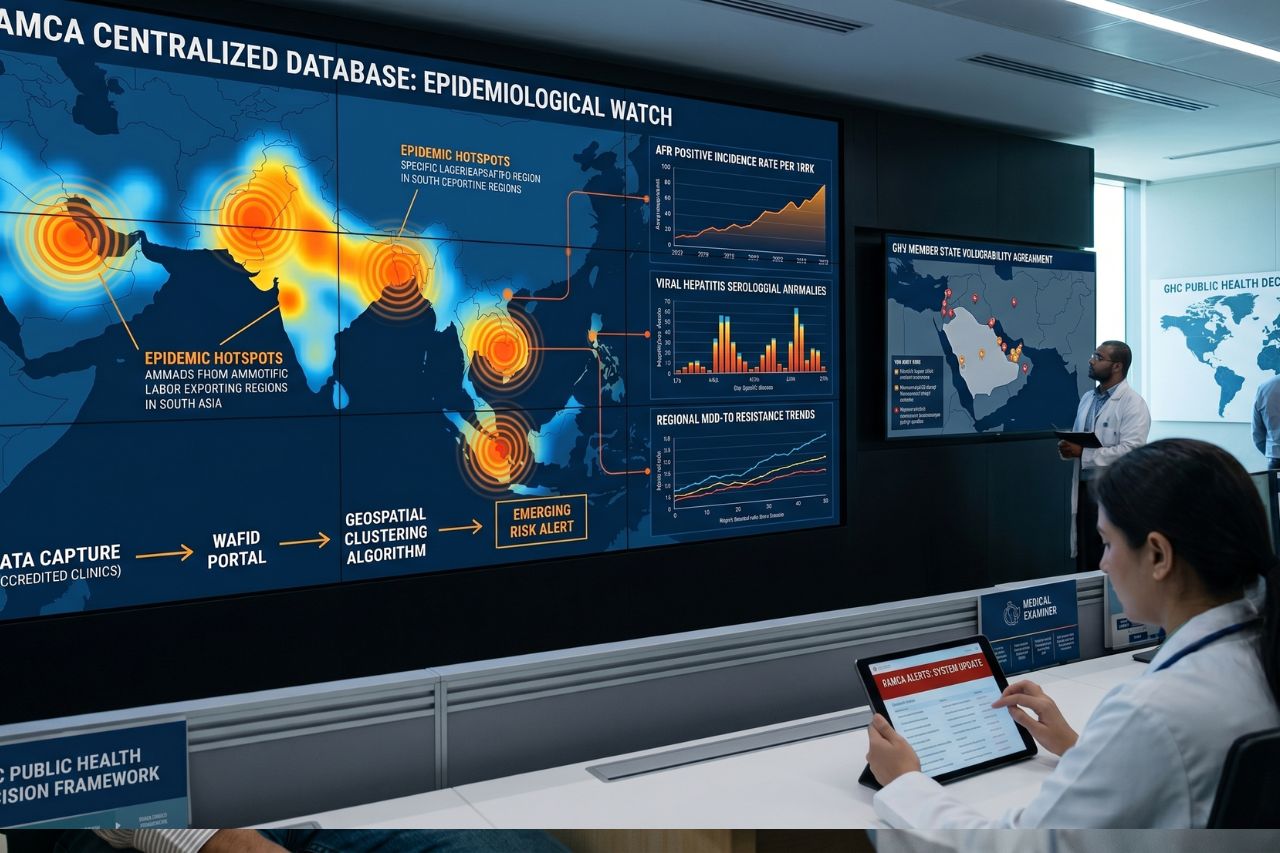
The GAMCA centralized database has become an important component in monitoring public health trends among expatriate workers traveling to Gulf Cooperation Council (GCC) countries. By collecting medical examination records from approved medical centers across multiple countries, the system helps health authorities identify epidemic hotspots, monitor communicable diseases, and maintain regional health security standards.
As labor migration to GCC nations continues to grow, centralized medical reporting systems play a crucial role in disease prevention, outbreak tracking, and cross-border health management. The GAMCA database supports this objective by enabling standardised medical reporting and coordinated health surveillance.
The primary objective of the GAMCA centralised database is to maintain a unified digital record of medical examinations conducted for visa applicants seeking employment or residency in GCC countries. The system allows approved medical centres to upload examination outcomes, ensuring consistency and transparency in medical fitness assessments.
Beyond visa processing, the database also contributes to broader public health objectives, including:
The centralized nature of the platform allows authorities to analyze health data more efficiently across different geographical regions.
One of the major advantages of centralised medical reporting is the ability to detect disease clusters and epidemic hotspots. When multiple applicants from a particular city, region, or country test positive for certain communicable diseases, the system may help health authorities identify emerging public health concerns.
Medical centres upload examination findings related to conditions such as:
By aggregating these results, the database can reveal unusual spikes in infection rates within specific populations or locations.
The reporting workflow generally follows a standardised sequence to ensure accuracy and reliability of medical records.
Candidate Registration: Applicants first register through the GAMCA system and receive appointments at approved medical centres.
Medical Examination: Authorised medical centres conduct mandatory tests, including blood screening, chest X-rays, and physical examinations, according to GCC medical guidelines.
Digital Data Upload: After examination, medical staff upload results to the centralised database. Each report is linked to the candidate’s identification details and destination country requirements.
Data Verification: Health authorities and authorised administrators review submitted reports to verify compliance with medical regulations and reporting standards.
Statistical Analysis: Aggregated medical data is analysed to identify disease prevalence trends, geographic concentration of infections, high-risk demographic categories, and potential epidemic outbreaks. This analytical process helps authorities respond more effectively to public health risks.
The GAMCA centralised database offers several advantages for GCC public health systems and immigration authorities.
Improved Public Health Surveillance: Centralised reporting enables continuous monitoring of infectious diseases among expatriate populations. Authorities can track changes in disease prevalence over time and adjust health policies accordingly.
Faster Epidemic Detection: When health officials notice sudden increases in positive cases from a particular region, they can investigate potential outbreaks earlier and implement preventive measures more rapidly.
Standardised Medical Reporting: Since all approved centres follow uniform medical protocols, the database promotes consistency in disease reporting and medical evaluation standards.
Better Resource Allocation: Accurate health statistics allow governments and medical authorities to allocate healthcare resources more efficiently in high-risk areas.
Enhanced Border Health Security: The system supports GCC countries in reducing the risk of cross-border transmission of communicable diseases through pre-travel medical screening.
Because the database stores sensitive medical information, strict confidentiality and security measures are essential. Authorised medical centres and administrators are generally required to follow data protection protocols to safeguard candidate information.
Important privacy measures often include:
Maintaining trust in the system depends heavily on the responsible handling of personal and medical data.
Despite its advantages, centralised disease reporting systems may face operational and administrative challenges.
Data Entry Errors: Incorrect candidate information or inaccurate medical uploads can compromise statistical reliability.
Delayed Reporting: Some medical centers may experience technical delays in uploading examination results, affecting real-time surveillance accuracy.
Infrastructure Limitations: Regions with limited digital infrastructure may face difficulties maintaining seamless connectivity with centralized systems.
Cross-Border Coordination: Different countries may apply varying public health standards, requiring continuous coordination between medical authorities and immigration departments.
The relevance of centralised medical databases became particularly evident during global health emergencies such as the COVID-19 pandemic. Systems capable of tracking infection trends and monitoring international travellers proved valuable for implementing travel restrictions, screening procedures, and public health interventions.
In future epidemics, platforms like the GAMCA database may continue to support:
As healthcare technology advances, GAMCA-style reporting systems may become more sophisticated through integration with artificial intelligence, automated analytics, and real-time health monitoring tools.
Potential future improvements could include:
Such developments could strengthen epidemic surveillance capabilities and improve international public health coordination.
The GAMCA centralized database serves not only as a visa medical processing system but also as a valuable public health surveillance tool. By collecting and analyzing disease statistics from approved medical centers, the platform helps identify epidemic hotspots, monitor communicable diseases, and support regional health security across GCC countries.
Through standardized reporting workflows, digital record management, and statistical analysis, the system contributes to early epidemic detection and improved cross-border disease prevention. As global mobility continues to increase, centralised medical databases will likely remain essential for protecting public health and ensuring safer international migration processes.