Mon to Sat 07 am to 06 pm
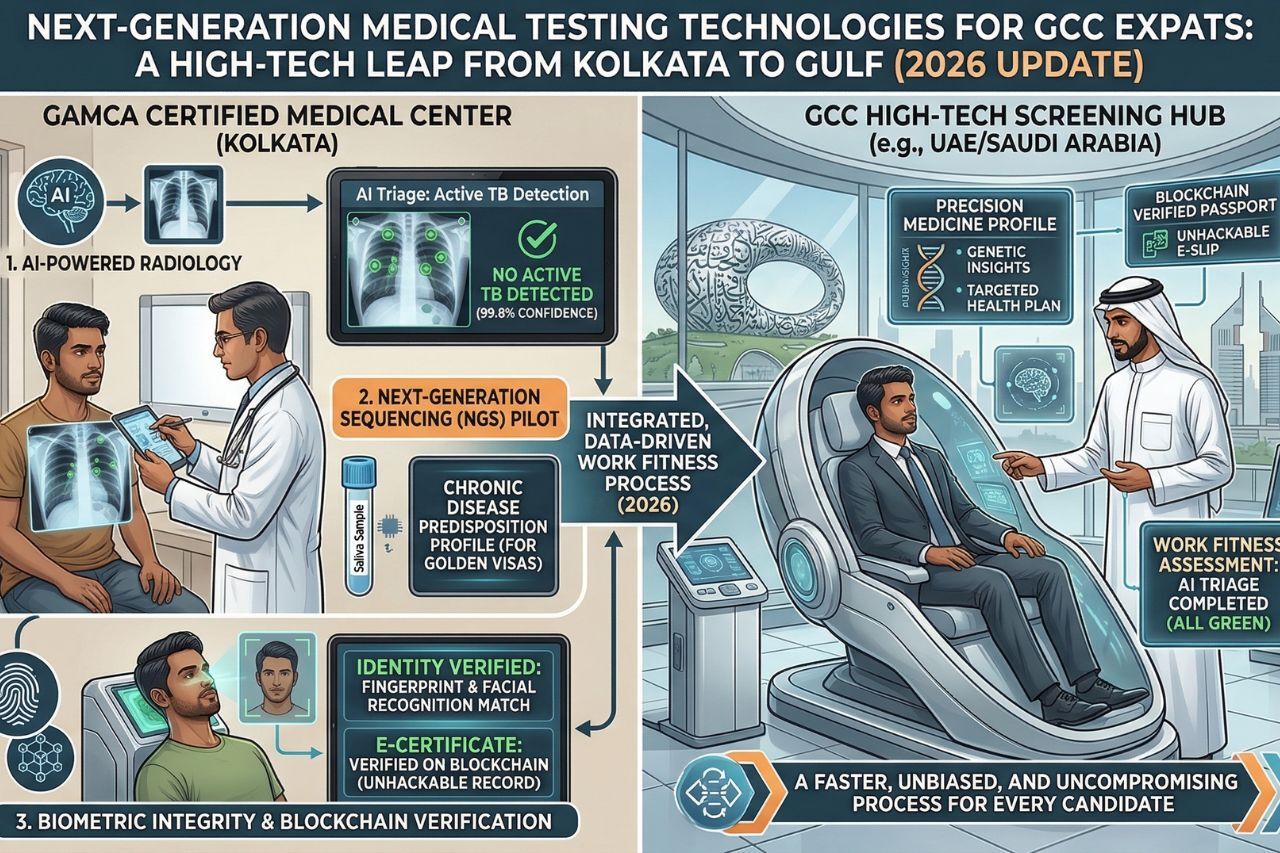
Healthcare systems across GCC nations are undergoing a major transformation. With increasing demand for faster, more accurate diagnostics, countries like the UAE, Saudi Arabia, and Qatar are investing heavily in advanced medical testing technologies.
For expatriates and job applicants undergoing the GAMCA medical test, these innovations could soon reshape how medical screenings are conducted, making them quicker, more precise, and more transparent.
GCC healthcare authorities are shifting toward digital, AI-driven, and value-based healthcare models to improve outcomes and efficiency.
Key reasons for this shift include:
This transformation directly influences how GAMCA-approved medical centres may operate in the near future.
One of the biggest advancements is the use of Artificial Intelligence (AI) in diagnostics.
How It Works:
AI systems analyse X-rays and radiology scans, blood test results, and medical history patterns.
Benefits:
AI tools can improve diagnostic accuracy by up to 20% in imaging analysis, making them highly valuable in medical screenings. In the future, GAMCA medical reports may rely heavily on AI-assisted evaluations.
GCC countries are building unified digital health systems that connect hospitals, labs, and clinics. Integrated platforms store billions of patient records and allow real-time access across facilities.
Impact on GAMCA:
This could eliminate delays often faced during GAMCA medical report processing.
New diagnostic tools are becoming portable, fast, and highly efficient. Features include on-site testing (no large lab needed) and rapid results within minutes, suitable for remote or high-volume screening.
For example, modern molecular diagnostic systems can detect diseases like TB, HIV, and hepatitis quickly using portable platforms.
GAMCA Impact:
Wearable technology is becoming part of the healthcare ecosystem in GCC countries. Smartwatches track heart rate and oxygen levels alongside other continuous health monitoring devices.
Future Role:
These tools may complement traditional GAMCA medical examinations in the future.
Telemedicine is rapidly expanding across GCC healthcare systems with developments like virtual consultations and remote diagnosis using connected devices. Saudi Arabia alone has invested heavily in telemedicine infrastructure.
GAMCA Relevance:
GCC countries are also exploring precision medicine, which uses genetic data to personalize healthcare. This allows for early detection of inherited diseases and better risk assessment for chronic conditions.
Future GAMCA Impact:
Governments in the GCC are even mandating the use of AI-powered tools in some healthcare systems to standardise testing and improve patient outcomes.
Benefits:
This could significantly streamline GAMCA medical report timelines.
The Internet of Medical Things (IoMT) is linking devices, systems, and healthcare providers through real-time data sharing and integrated networks.
Impact:
These emerging technologies will gradually transform the GAMCA medical process by reducing waiting times, improving accuracy, and enhancing transparency. However, they may also lead to stricter screening standards and more detailed health evaluations.
To stay ahead of these advancements, maintain accurate health records, monitor your health regularly, and stay updated with the new GAMCA guidelines. For the latest updates, trusted platforms like gamca.in provide useful insights.
GCC countries are rapidly adopting advanced medical testing technologies such as AI diagnostics, digital health records, and portable testing devices. These innovations are set to redefine how medical screenings, including GAMCA medical examinations, are conducted.
For applicants, this means a future of faster, smarter, and more reliable medical testing, but also a greater need to stay medically prepared at all times. Staying informed and proactive is the key to successfully navigating the evolving GAMCA medical landscape.