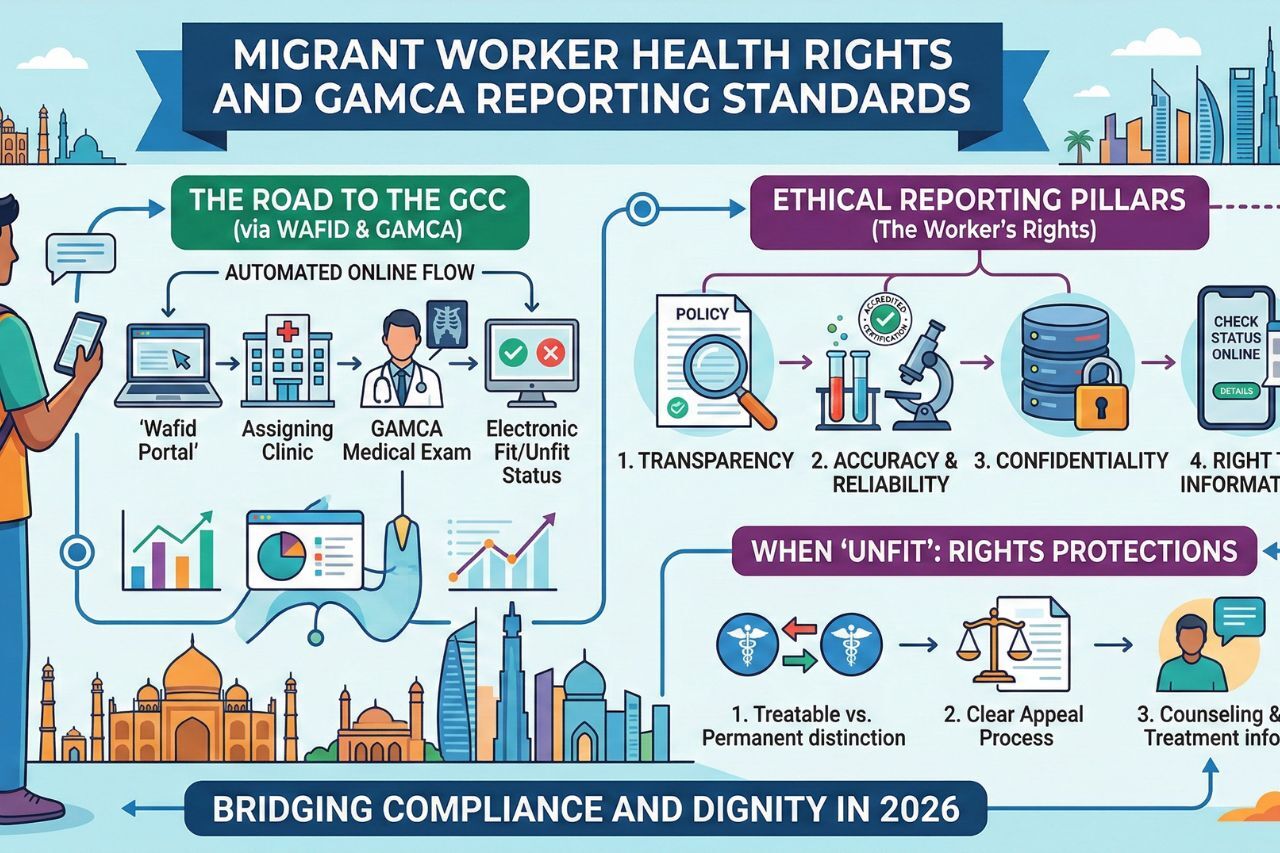
For many people from India heading to Gulf countries like the UAE,
Saudi Arabia, Qatar, Kuwait, Oman, or Bahrain for work, the GAMCA
medical examination is a key step. This check-up helps confirm that
workers are healthy enough to live and work abroad safely. At the same
time, it touches on important aspects of migrant worker health rights,
such as fairness, privacy, and the chance to address any issues in the
results.
This post looks at how GAMCA reporting standards work alongside the
rights of migrant workers, especially those from places like Kolkata
and other parts of India. It covers the basics, common concerns, and
useful steps to take.
How GAMCA Reporting Works
The GAMCA system, now largely operating under the
WAFID digital platform, sets uniform rules for
medical checks on people going to GCC countries. The aim is to make
sure everyone is free from certain health risks and able to handle job
demands.
Main parts of the process include:
-
Comprehensive Screening: A full review of your
health history, a physical check, blood and urine tests, chest
X-ray, and sometimes other assessments.
-
Binary Results: Results come as "Fit" (cleared for
visa) or "Unfit" (not approved). In 2026, some cases may receive a
"Temporary Unfit" status for treatable conditions.
-
Centralized Digital System: Reports go straight to
a central system for quick checking by embassies and immigration
offices, helping keep things consistent and reduce errors.
-
Validity: The certificate usually lasts 60–90 days,
so timing matters for visa applications.
Health Rights for Migrant Workers in This Process
Workers have basic rights rooted in international ideas about fair
treatment and access to care. The GAMCA setup tries to balance public
health needs in Gulf countries with respect for individuals.
Some key points include:
-
Informed Consent and Privacy: Testing should happen
with a clear understanding, and results need to stay private.
Digital systems in 2026 have enhanced data protection to prevent
unauthorized access.
-
No Unfair Treatment: Decisions about being unfit
should be based only on health factors that truly affect safety or
work ability. Treatable issues might allow a second chance after
care.
-
Options if Results are Unfit: For fixable
conditions like infections or controlled diabetes, people can get
treatment and try again later, often after a mandatory 3 to 6-month
waiting period.
-
Clear Communication: You should get details on why
a result is unfit to help decide next steps. Modern centers are now
required to provide more transparent reasoning for rejections.
Common Challenges
Even with set rules, some issues come up:
-
Workers sometimes don't get full explanations for unfit findings,
making it harder to respond.
-
The process can feel strict, especially for lower-skilled jobs where
a negative result might mean lost opportunities or added costs.
-
External factors like travel problems or regional instability (as
seen in early 2026) can delay things further.
Practical Steps to Protect Your Rights
To go through the GAMCA process more smoothly:
-
Official Channels: Book only through the official
WAFID/GAMCA portal to stay away from fake options.
-
Transparency: Be open about your health history and
bring any past records.
-
Request Reports: Ask for a copy of your full
report, especially if the outcome isn't what you expected.
-
Seek Evidence: If needed, gather proof from
specialists and contact the embassy for guidance on reviews or
re-tests. In 2026, many centers now offer an
online appeal option for specific cases.
-
Stay Updated: Keep track of updates from trusted
sources about any changes.
Wrapping Up
The GAMCA system helps keep health standards high for Gulf migration,
but it works best when paired with respect for migrant rights. Clear
rules, privacy, and fair chances to fix issues make the experience
better for everyone involved.