
Mon to Sat 07 am to 06 pm
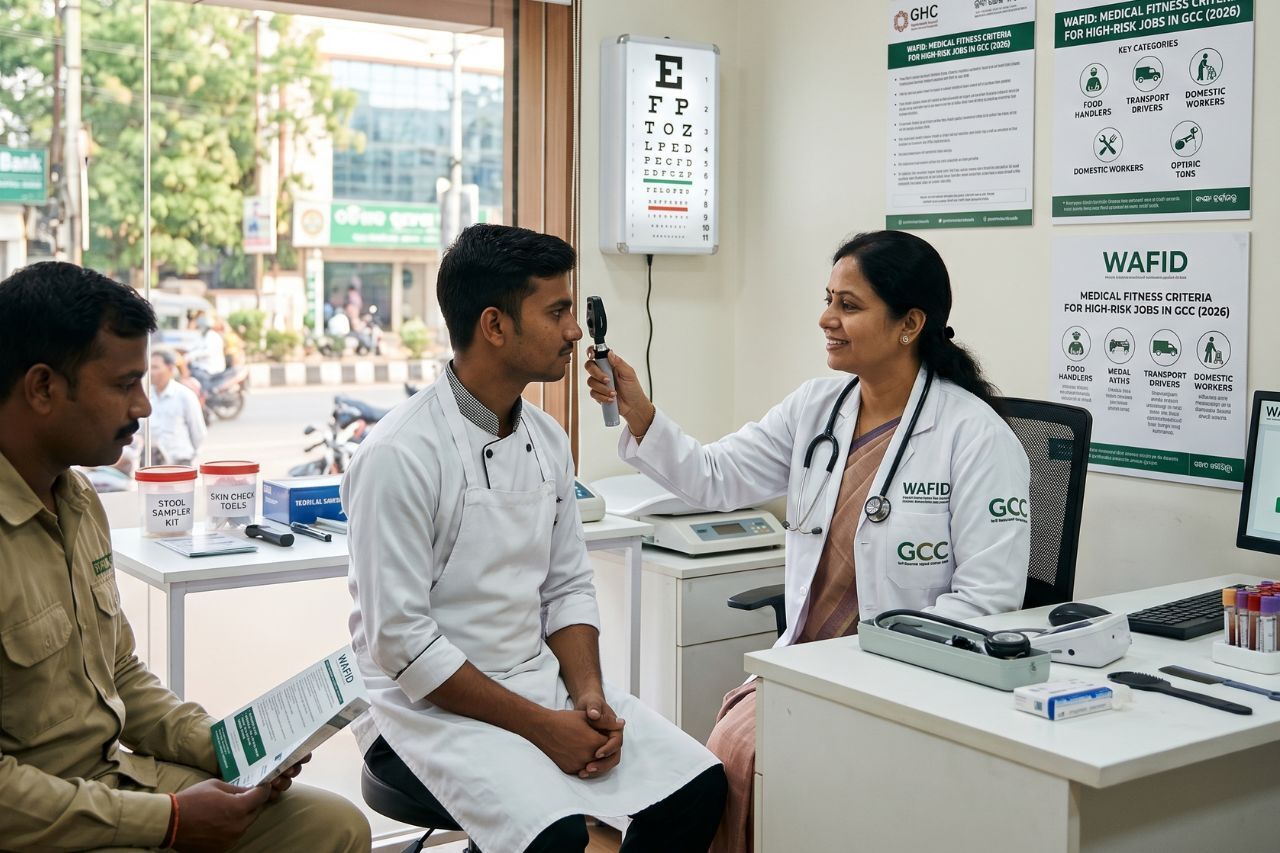
Strict medical screening regulations are enforced by the Gulf Cooperation Council (GCC) nations for foreign workers, especially those in high-risk occupations. Under the regulatory framework created by the Health Ministers' Council for GCC States and put into effect by the Gulf Cooperation Council (GCC) Approved Medical Centers Association, these positions, which range from domestic workers to healthcare personnel, are subject to increased scrutiny.
These standards, which are an essential component of GCC immigration and labor law, are intended to safeguard vulnerable groups, public health, and occupational safety.
High-risk job categories are those where workers:
Common High-Risk Categories:
The legal authority for medical fitness criteria stems from:
Key Legal Principle: Medical fitness is a mandatory precondition for visa issuance, and failure to meet the criteria results in automatic ineligibility.
Compared to general workers, high-risk categories undergo expanded testing protocols.
Mandatory tests include:
Legal Outcome: Active or contagious diseases → UNFIT classification. Some cases (e.g., treated TB) → temporary deferral.
(a) Food Handlers: Stool examination for parasites and screening for communicable gastrointestinal diseases.
(b) Domestic Workers: Broader infectious disease checks due to close household contact; mental health and general fitness evaluation.
(c) Healthcare Workers: Strict hepatitis screening and immunisation requirements in some GCC states.
For certain categories (especially domestic workers), pregnancy may lead to temporary unfitness, depending on the host country's policies. Legal justification includes employment conditions and health insurance limitations.
All applicants are categorised under a legally binding system:
This classification is enforced through the centralised system of the Gulf Approved Medical Centres Association.
The stricter criteria for high-risk jobs are based on three legal objectives:
6.1 Protection of Vulnerable Groups: Children, the elderly, and patients are at higher risk of infection.
6.2 Prevention of Disease Transmission: Food contamination and close-contact environments increase the spread.
6.3 Workforce Reliability: Ensures workers are medically fit to perform physically demanding roles.
7.1 Accredited Medical Centres: Only approved centers under the Gulf Approved Medical Centers Association can conduct tests.
7.2 Digital Verification: Reports are uploaded electronically. Embassies rely solely on official records.
7.3 Legal Consequences of Non-Compliance: Fraudulent reports result in blacklisting; non-compliant centres face suspension or closure.
8.1 Limited Appeal Mechanisms: Workers declared “UNFIT” often have restricted options to challenge results.
8.2 Ethical Considerations: Strict exclusions (e.g., HIV) raise human rights concerns and have a disproportionate impact on low-income migrant workers.
8.3 Variation Across GCC States: Although unified, minor differences in enforcement may exist at the national level.
Medical fitness criteria for high-risk job categories in the GCC represent a strict, legally enforceable public health regime. Backed by resolutions of the Health Ministers’ Council for GCC States, the framework ensures the protection of public health and standardized screening across member states. While highly effective in disease prevention, the system continues to evolve to address legal fairness, transparency, and worker rights concerns.