
Mon to Sat 07 am to 06 pm
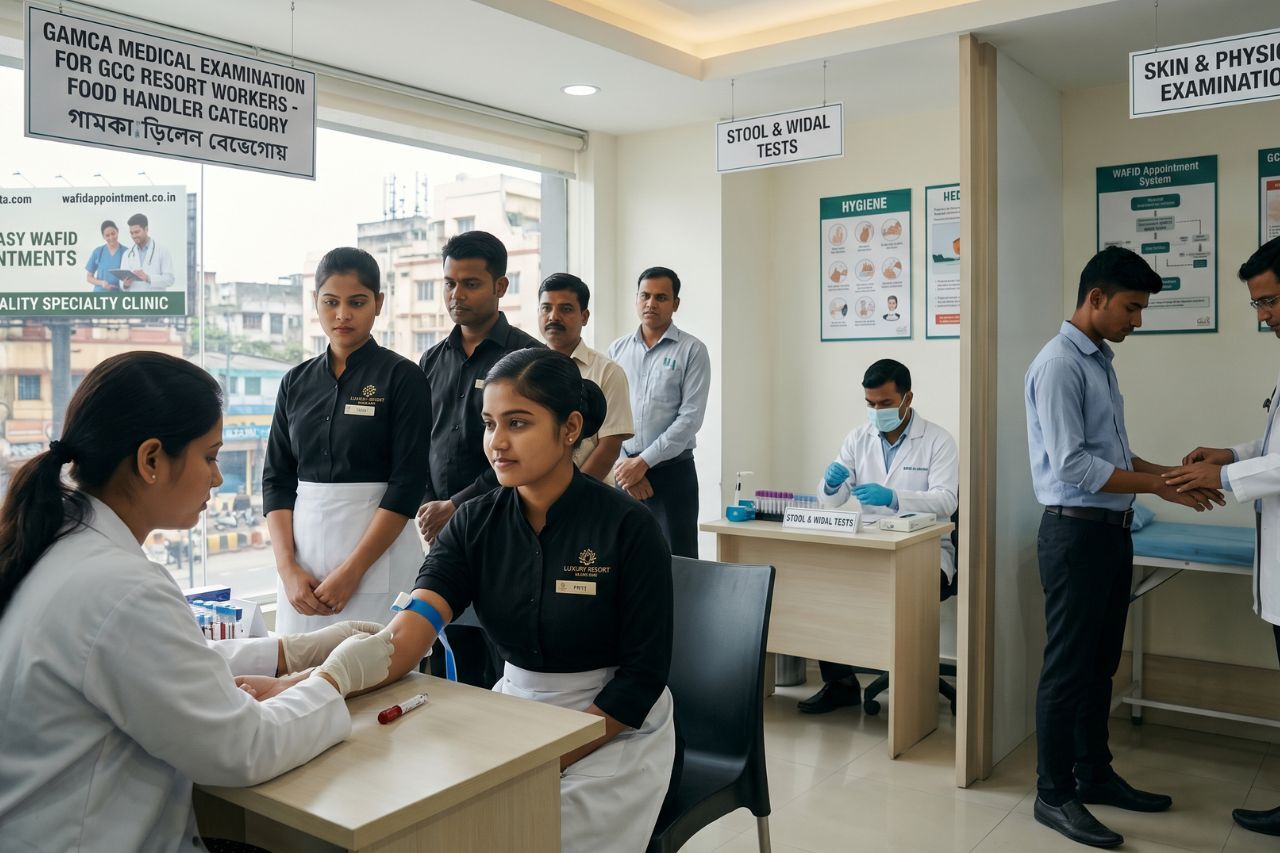
The hospitality industry in GCC countries, particularly in luxury resorts and five-star hotels, demands the highest standards of health and hygiene. To meet these expectations, expatriate workers must undergo mandatory medical screening under the Gulf Approved Medical Centres Association (now known as WAFID). These medical tests, governed by the Health Ministers’ Council for GCC States, ensure that hospitality workers entering the region are medically fit and do not pose any risk to guests or public health.
Luxury resorts in GCC countries cater to international guests who expect world-class hygiene and safety standards. Hospitality workers—including chefs, housekeeping staff, waiters, and spa professionals—operate in environments where cleanliness and health are critical. By April 2026, the "Vision 2026 Hygiene Initiative" has further integrated digital health monitoring to ensure these standards remain unmatched globally.
Medical screening under the Gulf Approved Medical Centres Association helps maintain:
Workers in luxury resorts are often classified under high-risk job categories due to direct contact with guests, food handling responsibilities, and exposure to shared environments like kitchens, pools, and spas. Because of this, GCC authorities apply stricter medical criteria to ensure that workers are free from communicable diseases. In 2026, the updated Sixth Version Regulations include a mandatory Mental Status Examination (MSE) to ensure overall suitability for these high-pressure service environments.
Hospitality workers must undergo a comprehensive medical examination that typically includes:
For food handlers and kitchen staff, additional tests such as stool examinations may be required to detect infectious conditions that could affect food safety. In 2026, molecular diagnostic tools have reduced the waiting time for these specific culture results to under 48 hours.
The outcome of the medical test determines eligibility for employment:
In luxury hospitality settings, even minor health issues like latent TB or uncontrolled blood sugar may lead to stricter scrutiny, often resulting in a "Temporarily Unfit" status until the condition is fully managed.
Saudi Arabia is known for applying the strictest medical standards in the region. Hospitality workers seeking employment in Saudi luxury resorts, especially those associated with the Red Sea Project or NEOM in 2026, may face more detailed screening procedures, lower tolerance for abnormalities, and limited flexibility in re-testing. This ensures the highest level of public health protection for the Kingdom’s expanding tourism sector.
The transition to the WAFID digital platform, completed by February 2026, has significantly improved efficiency. Through this system, medical reports are uploaded electronically in real-time, embassy verification is automated via QR-coded barcodes, and fraudulent manual certificates have been virtually eliminated. This ensures faster processing for hospitality workers ready to join the workforce.
Luxury resorts across the GCC region expect workers to meet not only medical standards but also overall fitness and hygiene requirements. Employers often prefer candidates who maintain good personal hygiene, have no history of communicable diseases, and are physically fit for demanding roles. This aligns with the broader public health objectives set by the Health Ministers’ Council for GCC States.
Despite its benefits, the GAMCA/WAFID system presents certain challenges, including strict medical criteria that may lead to rejection and limited appeal options for “UNFIT” results. Additionally, substantial increases in medical center fees across India (now averaging ₹7,500 to ₹8,500 in 2026) have placed a higher financial burden on applicants.
To improve chances of a successful outcome, applicants should:
Medical screening under the Gulf Approved Medical Centres Association plays a crucial role in maintaining the high standards of luxury hospitality in GCC countries. Guided by policies from the Health Ministers’ Council for GCC States, the system ensures that hospitality workers are medically fit, safeguarding both guests and the industry’s reputation. As the GCC continues to expand its luxury tourism sector in 2026, strict medical compliance will remain a key requirement for anyone seeking employment in this competitive field.