Mon to Sat 07 am to 06 pm
The system has transformed the medical screening process for expatriates seeking employment in GCC countries, including Saudi Arabia, the United Arab Emirates, Qatar, Kuwait, Oman, and Bahrain. One of the most significant developments within this system is the electronic integration between WAFID-approved medical centres, GCC embassies, and visa-issuing authorities. This digital coordination has streamlined pre-arrival verification by improving efficiency, reducing fraud, and accelerating visa processing procedures.
Before the introduction of centralised electronic systems, medical reports were often processed manually, resulting in delays, increased risks of document forgery, and inconsistencies between medical centres and immigration authorities. The integration of WAFID with embassies and visa-processing bodies has largely eliminated many of these operational challenges.
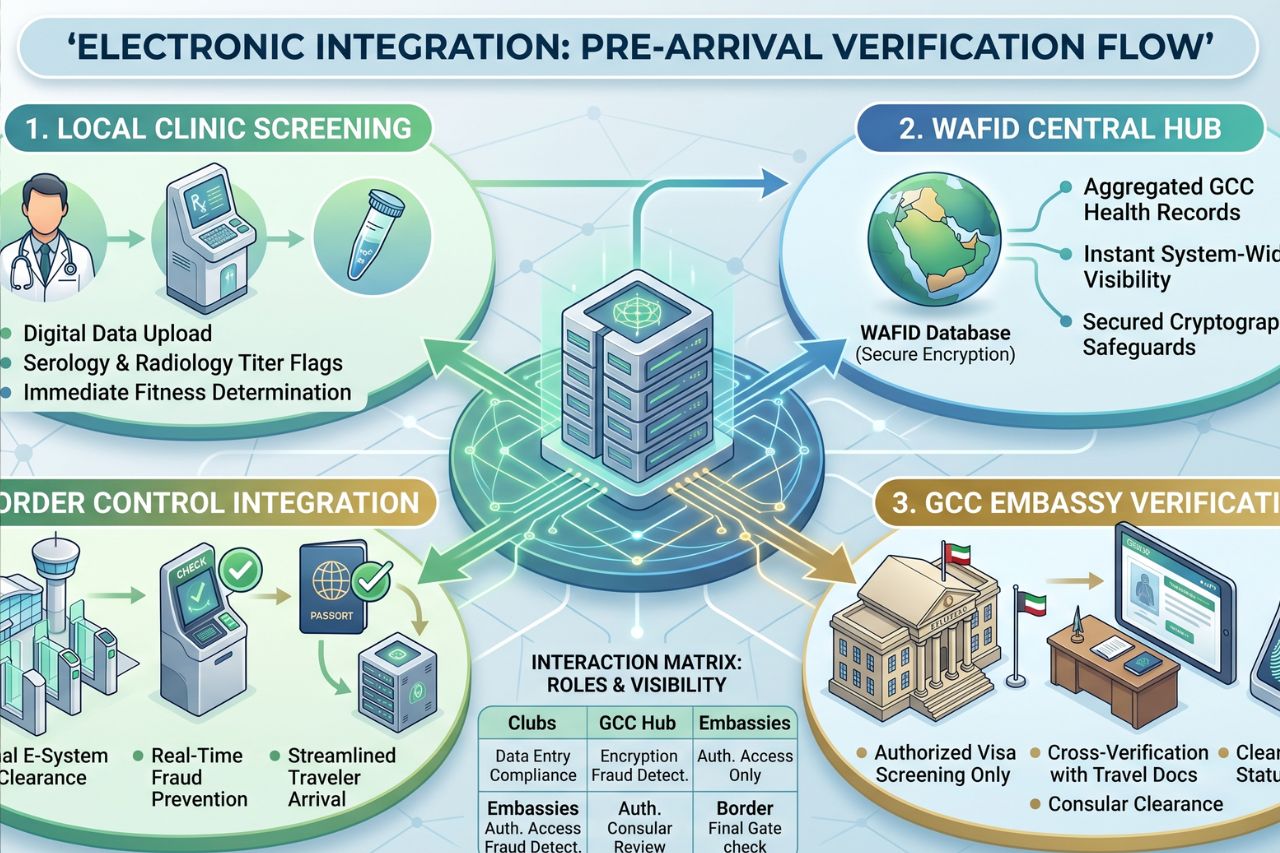
The WAFID platform functions as a centralised digital database that stores and manages medical examination records of expatriate workers. Approved medical centres upload examination results directly into the system after completing laboratory tests, radiological evaluations, and physical examinations.
Once uploaded, the medical status of the applicant becomes electronically accessible to authorised GCC authorities and embassy officials involved in visa processing. This integration creates a unified verification mechanism that reduces dependence on paper-based medical certificates and manual authentication.
The system allows authorities to instantly confirm whether an applicant has been declared medically fit or unfit according to GCC health regulations before the visa is issued.
Electronic integration between WAFID and GCC embassies plays an essential role in pre-arrival screening. Embassies no longer need to rely solely on physical medical reports submitted by applicants because medical fitness results can be verified directly through the electronic platform.
This integration helps embassy officials:
The digital verification process minimises the possibility of forged medical certificates being used during immigration applications.
In many cases, embassy staff can electronically confirm whether the medical centre is officially approved, the examination was completed successfully, and the applicant meets GCC medical standards. This significantly strengthens the reliability of the immigration screening process.
Visa-issuing bodies within GCC countries are also electronically connected to the Gamca system. Immigration departments and labour authorities can access applicants' medical status before final visa approval is granted.
This coordination allows authorities to:
The electronic system also supports automatic verification workflows, where visa processing may proceed only after a valid medical fitness result is confirmed within the WAFID database. As a result, employers, recruitment agencies, and immigration officials benefit from faster and more reliable processing procedures.
One of the biggest advantages of electronic integration is the simplification of pre-arrival verification. Previously, applicants often carried physical medical certificates that required manual authentication at multiple stages. This process was vulnerable to document loss, forgery, delays, and administrative errors.
The integrated digital system streamlines verification by enabling instant access to medical records through secure electronic channels. Once a medical result is uploaded, authorized authorities can verify the applicant’s status in real time without requiring repeated physical documentation.
This reduces processing delays, paperwork burden, duplication of records, and manual verification errors. Consequently, applicants experience a smoother visa application process, while GCC authorities maintain stronger control over medical compliance standards.
Electronic integration significantly improves fraud prevention within the visa and medical screening process. Since medical reports are uploaded directly by authorized WAFID-approved centers, opportunities for document tampering are greatly reduced.
The system helps authorities identify:
Centralised digital records also improve data accuracy because all parties rely on the same verified database. This reduces inconsistencies between medical reports presented by applicants and records available to immigration authorities. Audit trails and system logs further strengthen accountability by tracking who uploaded reports, when changes were made, and which users accessed records.
The integration between WAFID, embassies, and visa authorities supports broader public health and immigration objectives across GCC countries. By verifying medical fitness before travel, authorities can reduce the risk of importing communicable diseases and ensure that incoming workers meet occupational health standards.
This proactive approach helps strengthen disease prevention measures, improve workforce health monitoring, reduce healthcare system burden, and enhance border health security. For high-risk professions such as healthcare, food handling, transportation, and industrial work, early medical verification is especially important because these sectors directly affect public safety.
Although the system has improved efficiency, several operational challenges still exist. Differences in technological infrastructure between countries and medical centres can sometimes create synchronisation issues. Technical downtime, internet connectivity problems, and software errors may occasionally delay record updates.
Cybersecurity is another major concern because the system handles sensitive personal and medical information. Unauthorised access, hacking attempts, and data breaches remain potential risks that require continuous monitoring and strong digital protection measures. In addition, variations in administrative procedures between GCC countries may sometimes affect the consistency of implementation and verification processes.
To maintain secure integration, the WAFID system relies on several cybersecurity and data protection mechanisms. These include:
Such measures help ensure that medical information remains confidential, accurate, and protected from unauthorised modification. Secure digital integration is essential to maintaining trust between medical centers, embassies, immigration departments, employers, and applicants.
The electronic integration between the system, GCC embassies, and visa-issuing authorities has significantly improved the efficiency and reliability of pre-arrival medical verification for expatriate workers.
By replacing manual verification processes with centralised digital coordination, the system helps reduce fraud, improve processing speed, strengthen public health protection, and enhance immigration control. Approved medical centers, embassies, and GCC authorities now operate within a more connected and transparent framework that supports accurate medical screening before applicants enter GCC countries.
As digital infrastructure continues to evolve, electronic integration is expected to become even more advanced, secure, and efficient in supporting GCC immigration and healthcare objectives.